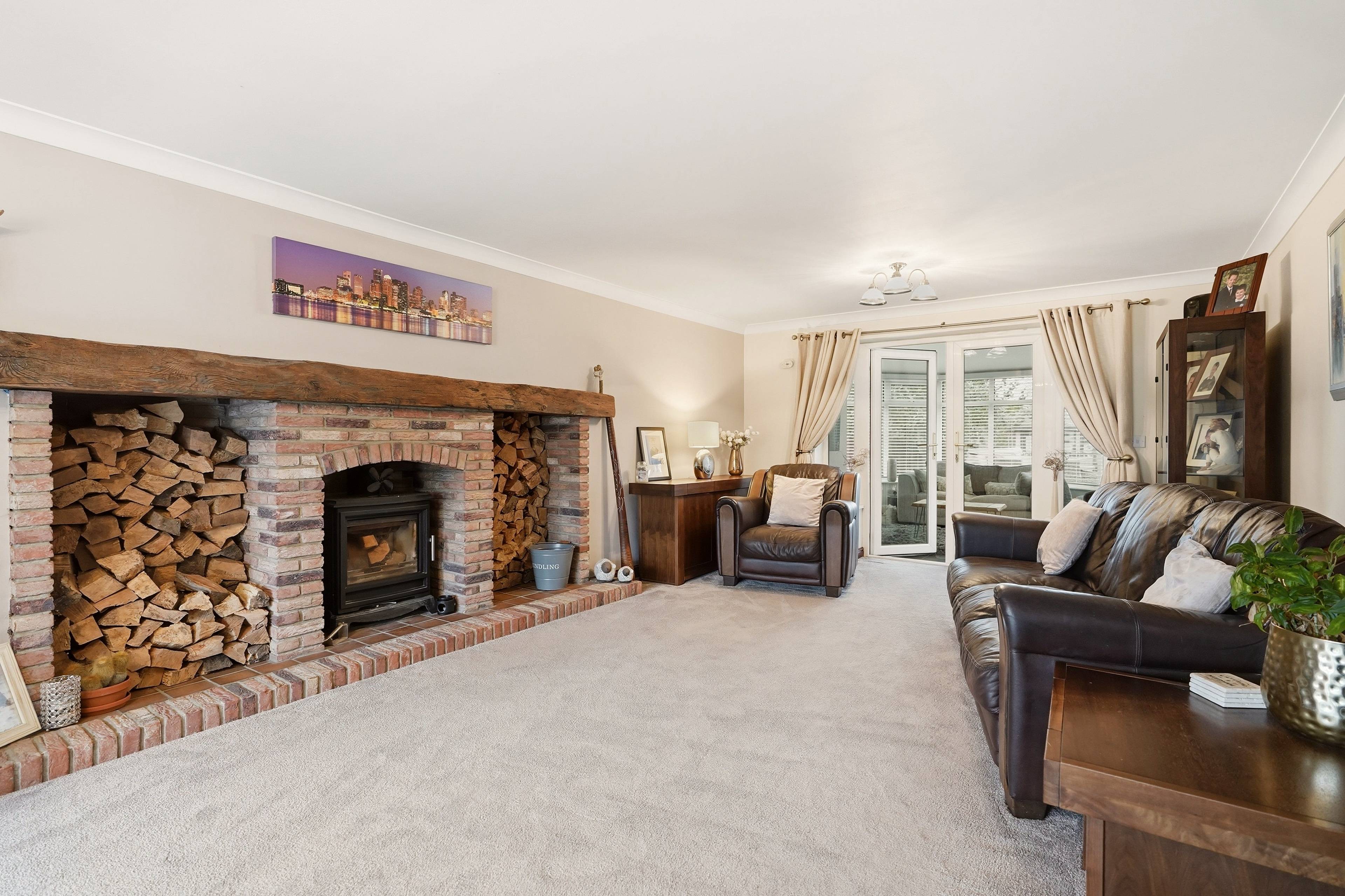
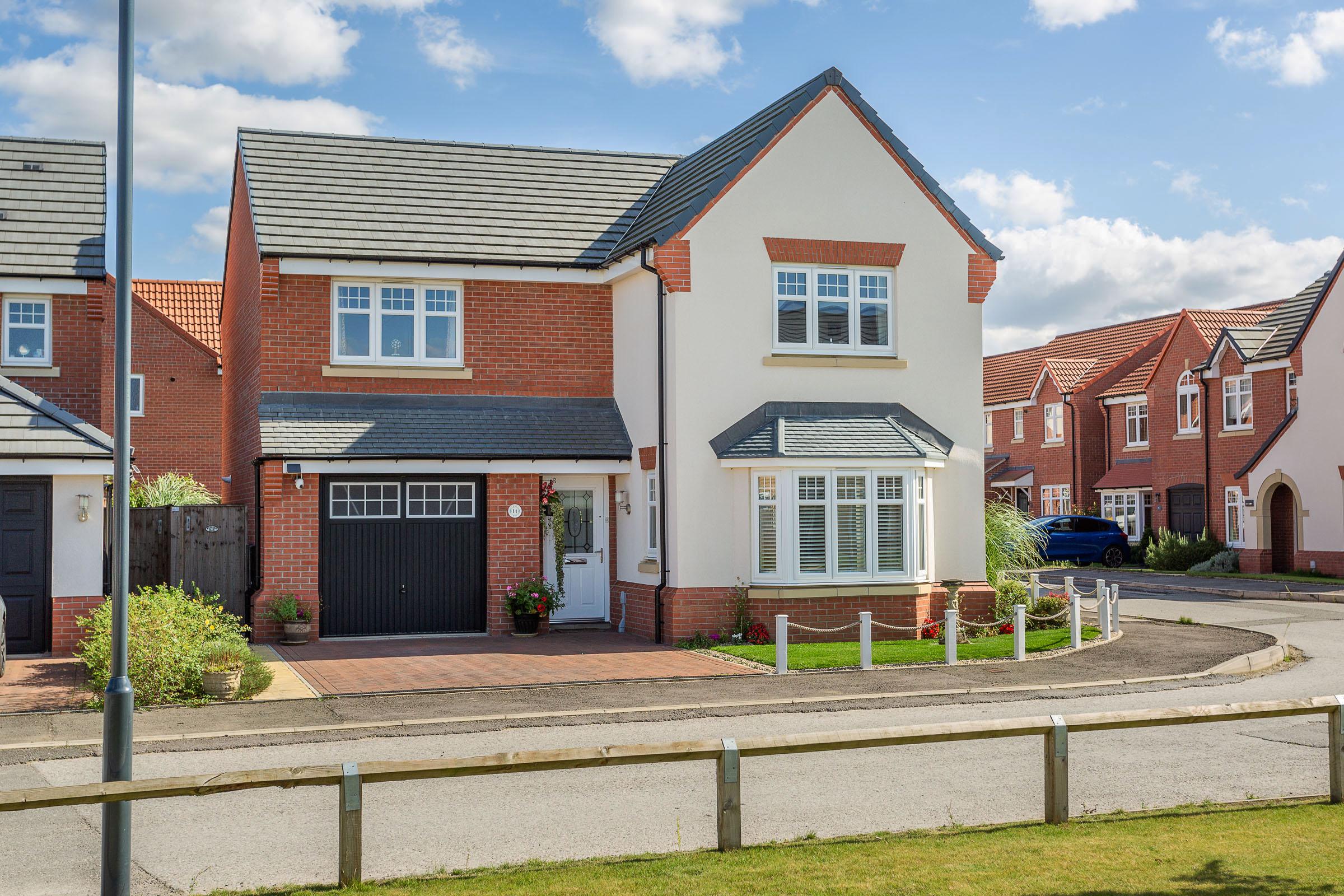
 Sold100% of asking
£385,000
Vincent Street, Carlton
4 bed detached · completed Apr 2026
5 offers
Snaith is a small market town in the East Riding of Yorkshire, just south of the River Aire and a little over a kilometre north of the M62. East Riding of Yorkshire Council describes it as a well preserved small market town with a very compact core, where the church, houses, shops and public buildings sit close together. Its landmark is the Priory Church of St Laurence, a Grade I listed church that was given to Selby Abbey in the early 12th century. Just north, across the Aire, is Carlton, a village in North Yorkshire known for Carlton Towers, a Grade I listed country house.
Homes sold in the 12 months to September 2026, from HM Land Registry, and our own sales.
| Type | Sales | Typical price | Change |
|---|---|---|---|
| Detached houses | 115 | £350,000 | +2.6% |
| Semi-detached houses | 95 | £200,000 | −5.2% |
| Terraced houses | 54 | £160,000 | +2.7% |
| Flats | 4 | Too few sales | – |
| All homes | 268 | £240,000 | −4% |
Typical means the median; change is on the 12 months before. Land Registry records a sale when the purchase is registered, usually one to three months after it completes, so the latest months fill in over time. Full sold prices for Snaith, by type and street.
The name Snaith has strong Scandinavian influences, and one suggestion is that it means a detached piece of land, perhaps land cut off by the River Aire or other streams. Snaith appears only indirectly in the Domesday Book, as the administrative centre for an area that included land at Birkin, Whitley and Hensall. By the 13th century it had grown into a town: the 1379 poll tax returns list an attorney, a fuller and a tailor among its residents, trades normally found in towns. The earliest known reference to a market is in a court file of 1359, and a survey of 1766 to 1767 records a daily market and an annual fair. Street names such as Beast Fair, Butter Market and Market Place still record what each area was used for.
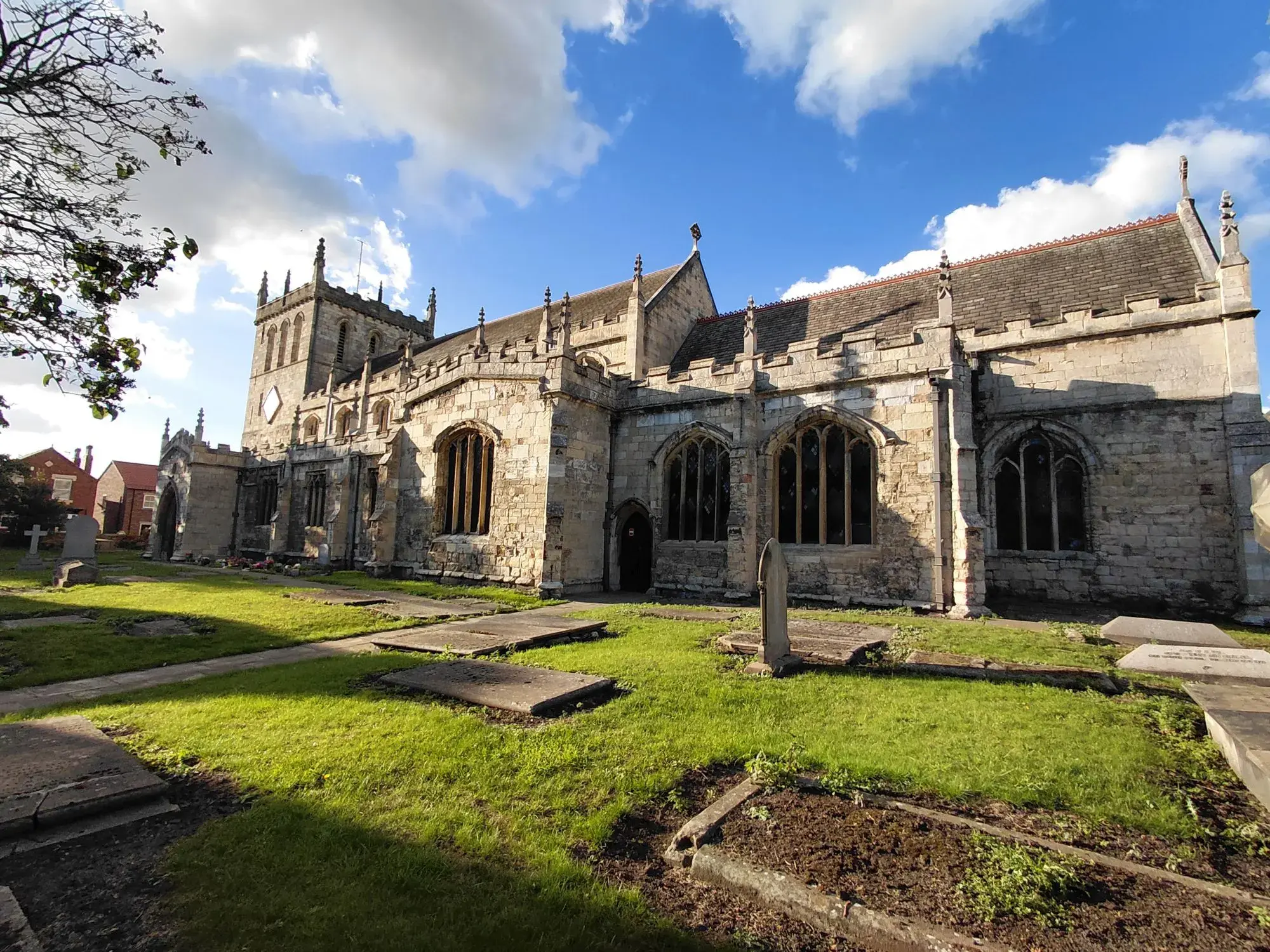
The priory church. The Church of St Laurence is Norman in origin and was given to Selby Abbey soon after 1101 or 1106. In 1301 the Archbishop of York allowed a small Benedictine priory to be set up here, which lasted until the Dissolution in 1539, when it had two monks and three secular priests. The church is listed Grade I. Its transept walls date from the 12th century, the tower from the 13th, the chancel from the early 14th, and the arcades, aisles and chapels from the 15th century, with restoration in 1867 to 1868. Inside are the Dawnay Chapel, with the tomb of Sir John Dawnay, who died in 1493, the Stapleton Chapel, and a marble monument of 1837 by Francis Chantrey to John Dawnay, 5th Viscount Downe.
The town centre. The centre runs east to west along High Street, Market Place and Beast Fair, with narrow lanes and footpaths between closely built houses. The council's appraisal describes it as a commercial and service centre for the area, with shops and offices, and notes that Market Place, High Street and Beast Fair feel enclosed, with few public open spaces.
Council. Snaith was historically part of the West Riding of Yorkshire. Today the main council is East Riding of Yorkshire Council, and Snaith is in the parish of Snaith and Cowick, with Snaith and Cowick Town Council as the local council. The parish also takes in East and West Cowick.
Carlton. Carlton is a separate village and civil parish in North Yorkshire, across the River Aire on the A1041 Selby to Snaith road, which forms its main street. North Yorkshire Council is its main council, and it has its own parish council. It was in Selby District until April 2023. Carlton grew as a linear village along the main street, with development to the east held back by the parkland of Carlton Towers.
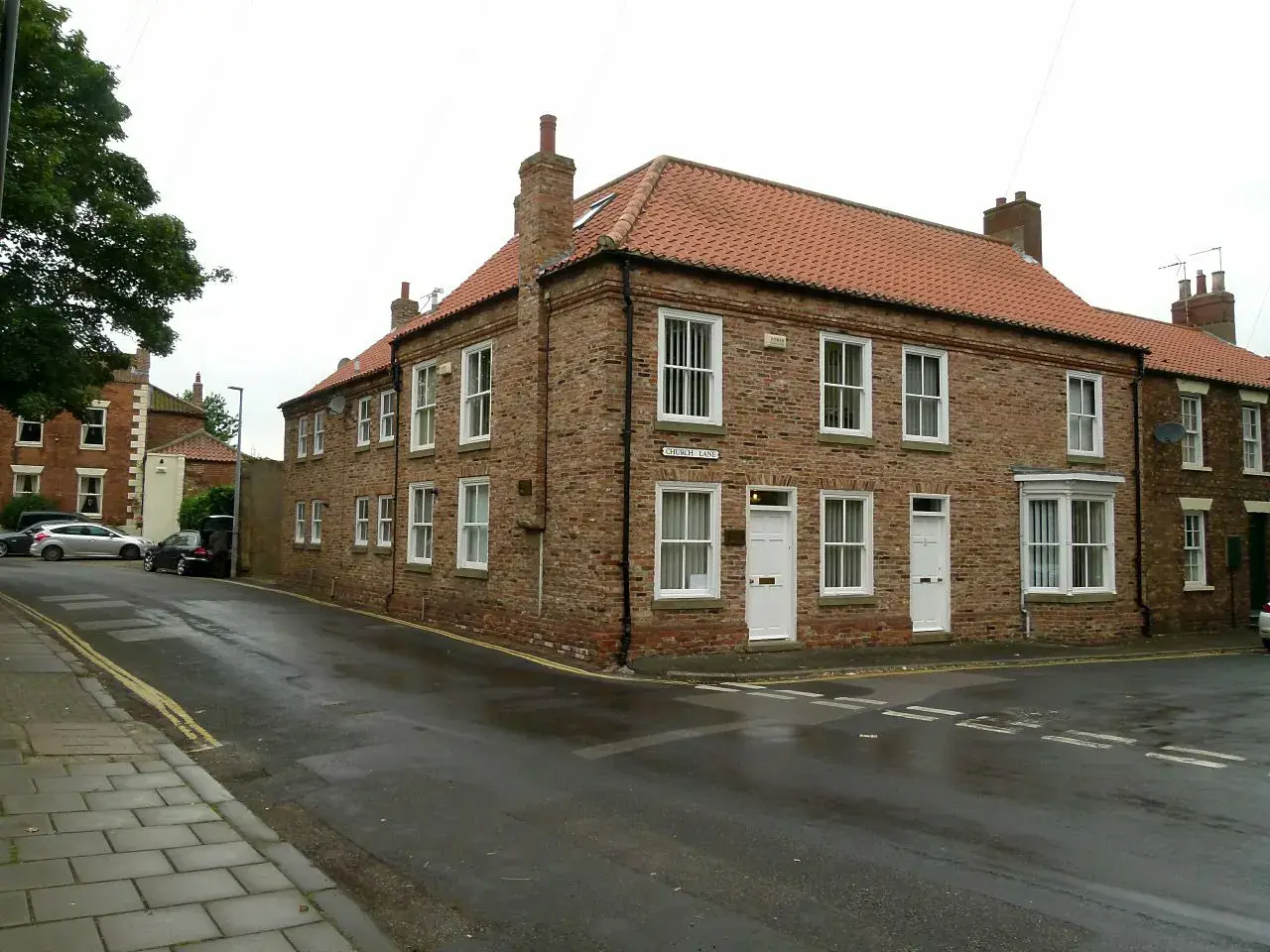
The old town. Snaith Conservation Area, designated in 1969, covers most of the historic core, from Snaith Hall in the south to Priory Lane in the north. East Riding of Yorkshire Council's appraisal says most buildings here are two storeys and joined to their neighbours, with a few three-storey town houses on High Street and a mix of detached higher-status houses. Brick is the main material, sometimes rendered or painted, with stone kept for buildings such as the church and Snaith Hall. Roofs are mostly clay pantiles or slate, though many now have concrete tiles. Few houses in the centre have front gardens.
Listed buildings. The appraisal counts 36 listed buildings in Snaith. All except the church are Grade II, including Snaith Hall on Pontefract Road, the old grammar school, the town lock-up on Butter Market, the Methodist chapel on Cowick Road, the Downe Arms Inn on Market Place and a number of houses on Beast Fair, Church Lane, High Street and Market Place. If you buy a listed building, most changes need listed building consent.
Newer housing. The council notes that the old centre is hemmed in on three sides by modern development, including newer housing to the south of the town and an estate of mainly bungalows west of Priory Lane. In a conservation area some work needs permission that wouldn't elsewhere, and some trees are protected by tree preservation orders, so check with East Riding of Yorkshire Council before planning major changes.
Flooding. The council's appraisal notes that Snaith, like Airmyn and Rawcliffe, is protected by substantial river banks to prevent flooding from the Aire. Check the flood risk for any address you are thinking of buying.
The Priory Church of St Laurence. The church stands at the heart of the town, and the council's appraisal calls it the most outstanding building in Snaith. The churchyard, with its mature yews, is one of the few open spaces in the centre, and two altar tombs in it are listed Grade II. The church is still the parish church, in the Church of England's Diocese of Sheffield.
Around the town. Snaith Hall's grounds have protected trees, including beech, lime, yew and holly. About 300 metres east of the conservation area, Snaith Pit is a former brickworks that has grown back into deciduous woodland and is a Site of Nature Conservation Importance. North of the town, between the railway and the River Aire, lies Snaith Marsh, now mostly farmland.
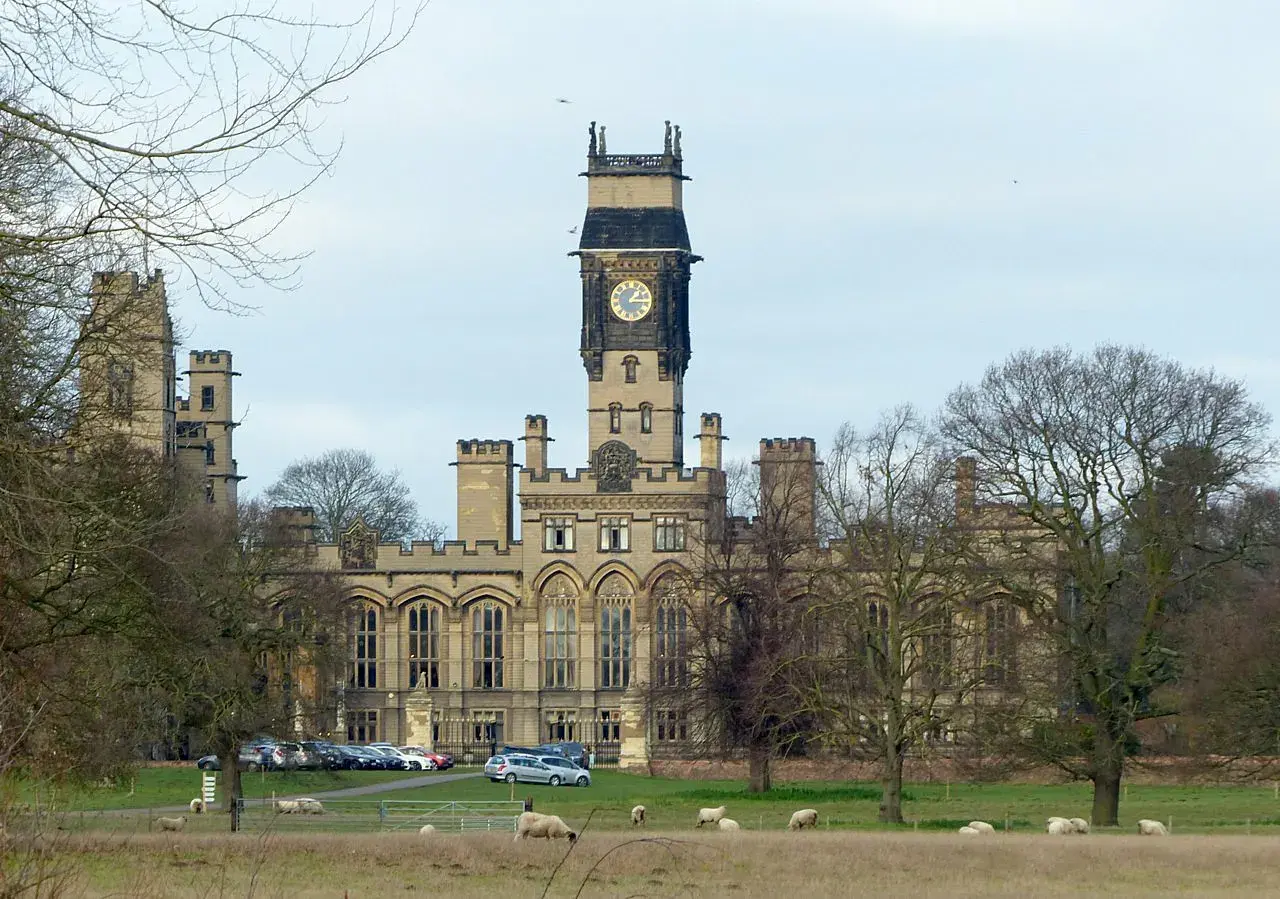
Carlton Towers. In Carlton, Carlton Towers is a Grade I listed country house. Its oldest range dates from 1614, and it was enlarged and encased in a Gothic style by Edward Welby Pugin in 1873 to 1875, with interiors by J F Bentley that its listing calls one of the most ambitious suites of Victorian rooms in England. It is still a family home, and it hosts weddings, events, bookable tours and retreats rather than opening for casual visits.
Drax Power Station. Drax Power Station, near Selby, is the area's best-known landmark. Drax Group says it now runs entirely on compressed wood pellets, after its coal units stopped commercial operation in March 2021, and it offers free tours of the site.
Latest inspection as the report words it. Ofsted stopped single-word overall grades in September 2024 and began report cards in November 2025, so recent reports read differently.
Snaith and Cowick. East Riding of Yorkshire Council runs admissions for schools in the East Riding. It is the admissions authority for community and voluntary controlled schools, such as Snaith Primary and Cowick CE Primary, and decides places there using the School Admissions Code and each school's oversubscription criteria. Academies, including The Snaith School, set their own admissions rules and decide their own places, but you still make one application through the council, naming up to three schools. Most East Riding schools have a catchment area, and children living in it have a high priority for a place, but a place is not reserved: if your preferred schools are full, the council offers a place at the next nearest school with spaces. Check an address on the council's catchment finder on its school catchment areas page, and see its school admissions pages.
Carlton. Carlton is in North Yorkshire, so families there apply through North Yorkshire Council, including for schools in the East Riding. Carlton Primary School is an academy, which sets its own admissions rules, though the council co-ordinates applications and makes the offers. North Yorkshire Council says your catchment school depends on your home address and may not be the one nearest to you, and that the nearest school for transport purposes may differ from the catchment school used for admissions. A catchment address gives priority at schools that use catchment, not a guaranteed place. Check an address on the council's map on its finding a school page, and see its admission policies.
Check each school's latest Ofsted report and admissions area before you buy: catchments change from year to year.
Your local Preston Baker Associate knows these streets. Estate agents in Snaith and Carlton.

Completed sales. Prices are what the buyer paid.
Sold100% of asking Sold100% of asking
 Sold100% of asking
4.6 from 107 Google reviews of Preston Baker Selby
Zoe and co, have been great from the first enquiry onwards. Now have two properties on with them. Very professional and give honest advice. Will use again.
Anna and Zoe have helped us through the purchase of a property. Always helpful and response to queries super quick which was fantastic. Thank you so much
We were very impressed with both Anna & Zoe’s knowledge and expertise of the properties we viewed and the current market. Anna was always willing to answer a call or text with any questions we had. Execptional customer service and a warm friendly manner. We highly reccomend Preston Baker.
Enter your postcode for an instant estimate from recent sales near you. For a price you can put on the market, book a free valuation with your local Associate.
Book a free valuationSnaith is in the East Riding of Yorkshire, and East Riding of Yorkshire Council is the main council, with Snaith and Cowick Town Council as the local council. Neighbouring Carlton, across the River Aire, is in North Yorkshire, under North Yorkshire Council.
Yes, on the Pontefract line, managed by Northern. But the service is extremely limited, between one and three trains a day, so most people use the 401 bus to Selby or Goole, which both have stations with many more trains.
Snaith Primary School on Bourn Mill Balk Road, Cowick CE Primary School in East Cowick, and The Snaith School, a secondary for ages 11 to 16 on Pontefract Road. Carlton Primary School serves Carlton. East Riding of Yorkshire Council gives places at Snaith Primary and Cowick; The Snaith School and Carlton Primary are academies with their own admissions rules.
A Grade I listed country house in Carlton, begun in the early 17th century and remodelled in the Gothic style by Edward Welby Pugin in the 1870s. It is still a family home, and hosts weddings, events and bookable tours.
Guide checked 29 November 2026. Contains HM Land Registry data © Crown copyright and database right 2026. This data is licensed under the Open Government Licence v3.0. Sources: East Riding of Yorkshire Council: Snaith Conservation Area Appraisal (June 2009), Planning Data (GOV.UK): Snaith conservation area, British Listed Buildings: Church of St Lawrence, Snaith and Cowick (Historic England list entry 1161899), British Listed Buildings: Carlton Towers (Historic England list entry 1295955), North Yorkshire Council: Selby District Local Plan, Carlton inset (2005), Carlton Parish Council, Carlton Towers, Drax Group: Drax Power Station, GOV.UK Get information about schools: Snaith Primary School, GOV.UK Get information about schools: Cowick Church of England Voluntary Controlled Primary School, GOV.UK Get information about schools: Carlton Primary School, GOV.UK Get information about schools: The Snaith School, Ofsted: Snaith Primary School, Ofsted: Cowick Church of England Voluntary Controlled Primary School, Ofsted: Carlton Primary School, Ofsted: The Snaith School, East Riding of Yorkshire Council: School admissions, East Riding of Yorkshire Council: About school admissions, East Riding of Yorkshire Council: About school place applications, East Riding of Yorkshire Council: School catchment areas, North Yorkshire Council: Finding a school, North Yorkshire Council: School admission policies and statistics, National Rail: Snaith station, Northern: Snaith station, Bus Times: buses serving Snaith, Bus Times: buses serving Carlton, Selby, Bus Times: 401 Selby to Goole (Arriva Yorkshire), Bus Times: 488 Hensall to Goole (Thornes Independent), Wikipedia: Snaith, Wikipedia: Snaith Priory, Wikipedia: Snaith railway station, Wikipedia: Carlton, Selby, Wikipedia: M62 motorway, Wikipedia: A roads in Zone 6 of the Great Britain numbering scheme.