
Living in Farsley
Farsley is a village in west Leeds, on the south side of the Aire Valley, between Pudsey, Stanningley, Calverley and Rodley. It grew from a medieval settlement into a cloth-making village and then, in the 19th century, into a mill town, and much of what was built then still stands: stone terraces, chapels, clubs and two large mill complexes, Sunny Bank Mills and Springfield Mills. Town Street is the main street, with shops, cafés and pubs. Around the old centre are 20th-century estates, and on the southern edge are New Pudsey station and the Ring Road.
Farsley at a glance
Homes sold in the 12 months to September 2026, from HM Land Registry.
| Type | Sales | Typical price | Change |
|---|---|---|---|
| Detached houses | 38 | £377,500 | −23% |
| Semi-detached houses | 52 | £301,000 | +4.5% |
| Terraced houses | 84 | £227,430 | −3.2% |
| Flats | 21 | £142,000 | +1.4% |
| All homes | 195 | £268,000 | +4.9% |
Typical means the median; change is on the 12 months before. Land Registry records a sale when the purchase is registered, usually one to three months after it completes, so the latest months fill in over time. Full sold prices for Farsley, by type and street.
What it's like to live in Farsley
Farsley appears in the Domesday Book of 1086, when it was part of the manor of Calverley and Farsley. The name is usually read as a clearing in woodland, probably one with gorse. The medieval village grew up where Back Lane and Water Lane meet Town Street, and for centuries Farsley had no church of its own: people went to St Wilfrid's at Calverley. Before the mills came, Farsley men were clothiers, making woollen cloth at home on hand looms to sell in Leeds, and some of their three-storey weavers' cottages still stand on Town Street and at Bagley.
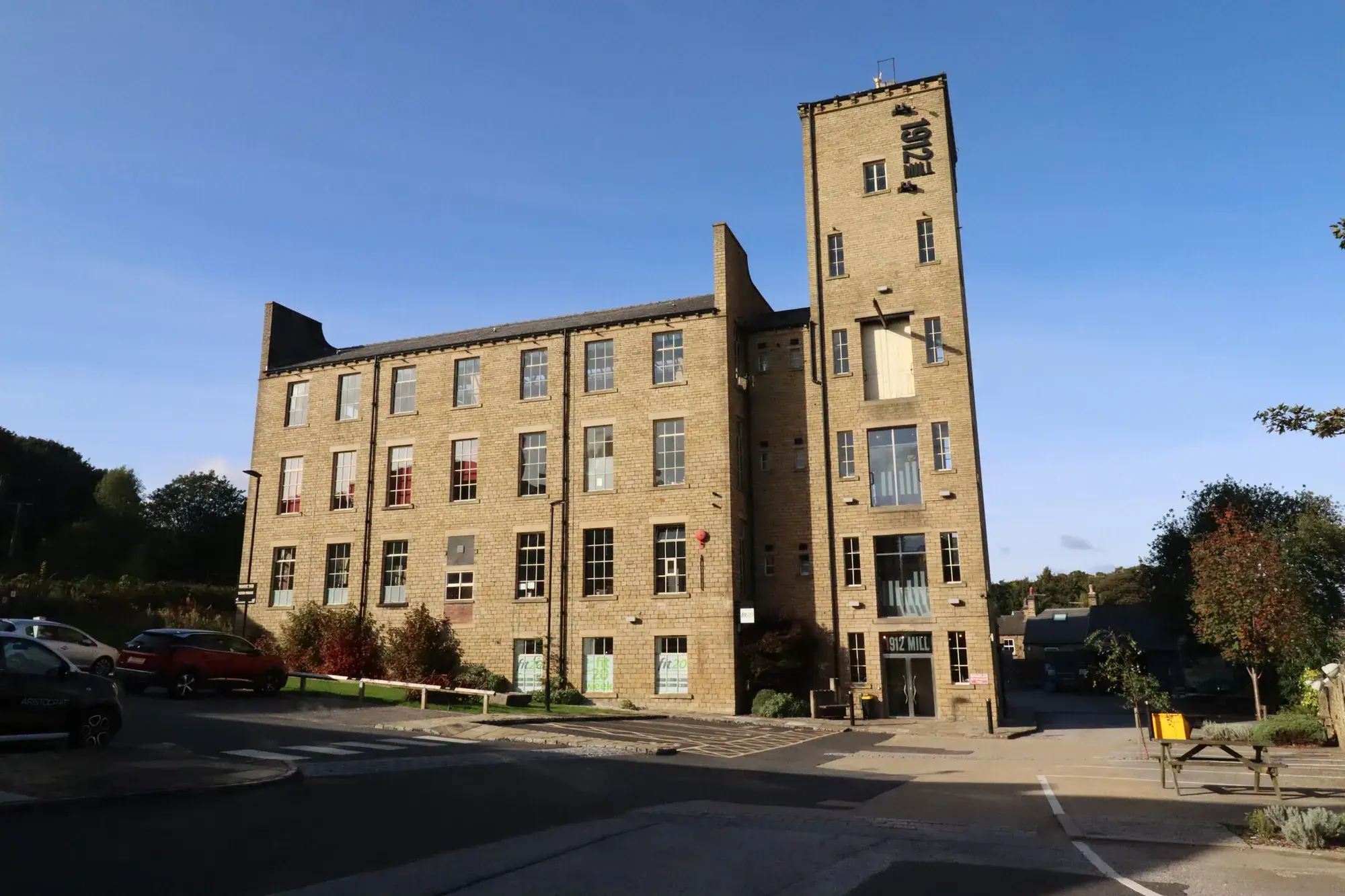
In the 19th century the village was transformed. The Gaunt and Hainsworth families built and ran many of the mills in Farsley and Bramley. Sunny Bank Mills began in 1829, when local clothiers clubbed together to build a scribbling and fulling mill, the Farsley Club Mill; it grew into the most prominent mill in the village and made fine worsted cloth until 2008. Springfield Mills at Bagley was built by Reuben Gaunt in 1864 to spin fine yarn from merino wool. Streets of terraced houses went up for mill workers, starting in 1841 when John Hainsworth laid out Ebenezer Street, North Street, Well Street and East Street, and the population grew almost five times over the century, to 5,500 by 1901. Farsley became a parish in 1844 and an urban district in 1894, was merged into the Borough of Pudsey in 1937, and became part of Leeds in the 1970s.
Farsley's best-known son is the Rev. Samuel Marsden, born at Bagley in the 1760s, who became a chaplain in New South Wales and did much to start the wool trade between Australia and the West Riding. The cottage he grew up in, at Turner's Fold off Town Street, was pulled down in 1923, and in 1934 a memorial with a sheep's head was put up on the site, in the small garden known as Sheepshead Park. St John's Church on New Street, built in 1842 to 1843 and listed Grade II, has stained glass windows remembering him.
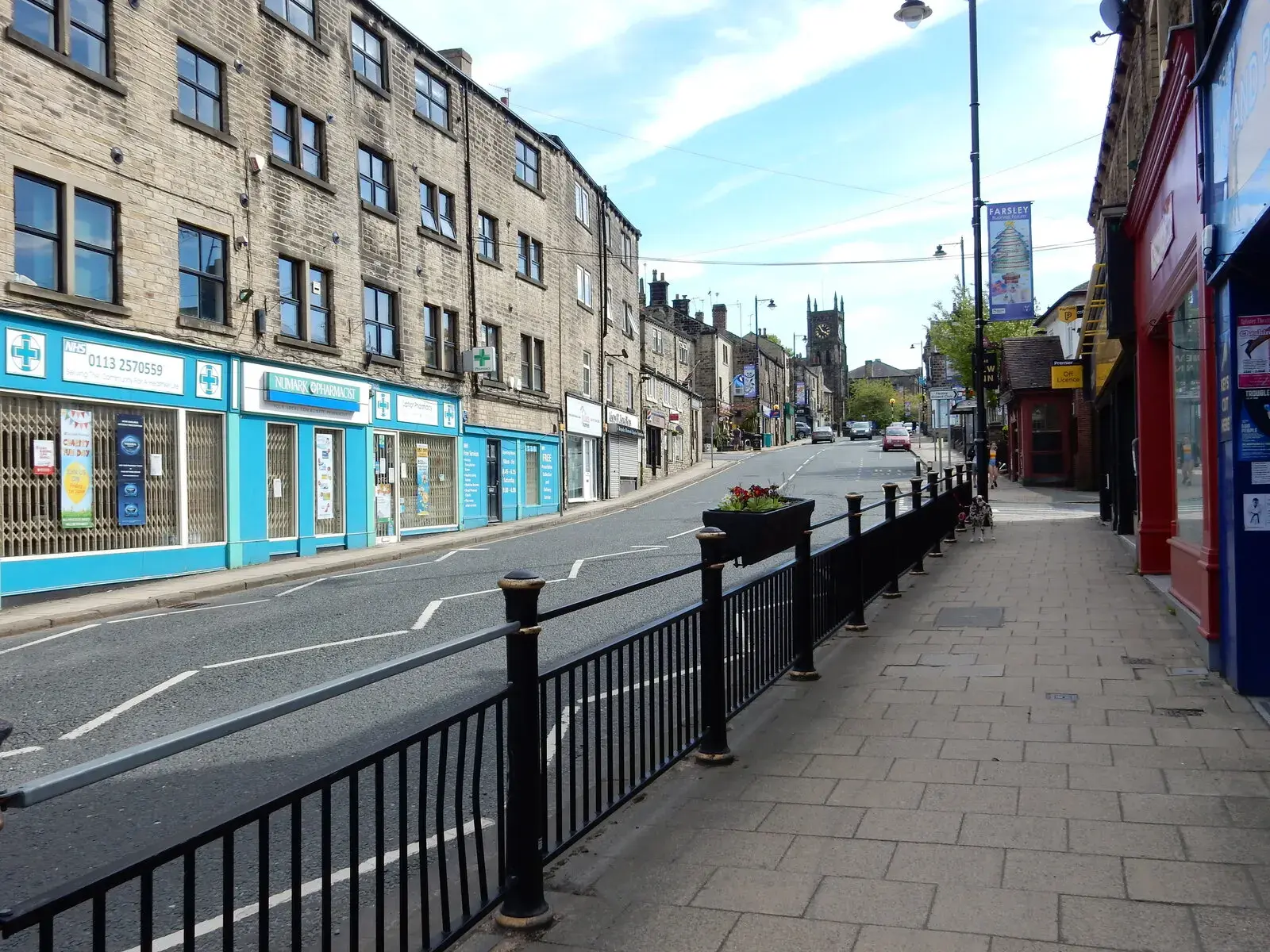
Today Town Street is the centre of the village, with shops, cafés and pubs, and the village design statement notes how busy it is at lunchtime on weekdays and all day on Saturdays. It is also a busy through road. Sunny Bank Mills, just north of the centre, has been turned into offices, studios, shops and a gallery since 2010, and is still owned by the Gaunt family.
Homes and streets
Much of the old village is in the Farsley Conservation Area, first designated in the late 1980s and reviewed by Leeds City Council in 2010. The council's appraisal describes stone mills, terraces, chapels, club buildings and large detached houses standing side by side, almost all built of locally quarried sandstone with stone slate or Welsh slate roofs. In a conservation area some demolition needs consent and the council considers the look of a whole terrace when deciding on changes to one house, so check before planning major changes. Leeds City Council has also adopted a Farsley Village Design Statement (2010) as planning guidance, which describes each part of the village.
Terraces. Stone terraces are the most common older homes, in two kinds: back-to-backs with front doors opening straight onto the pavement, and through terraces with small front and back gardens behind low walls. Most are two storeys. Prospect Square and Poplar Square, off New Street, have an unusual U-shaped layout, and the larger terraces on New Street overlook West Royd Park. There are also terraces and back-to-backs at Low Bank, below Sunny Bank Mills.
Victorian villas. The mill owners built themselves larger houses, such as Springwood Hall, Oakroyd and pairs of villas set in big gardens behind high stone walls and gate piers, and there are more substantial houses on Calverley Lane and New Street.
20th-century estates. Farfield, west of Town Street, was started in the 1930s and finished after 1945, with semi-detached houses in brick and render and tree-lined roads such as South Drive. Springbank was begun in the early 1960s and has grown since; the Kirklees estate north of Bagley Lane has detached and semi-detached houses in light-coloured brick; and Wadlands and Beech Lees have detached houses, semis and bungalows. Marsden Court, off Water Lane, is a tower block of flats.
Newer homes. Former mill sites at Beck Bottom and Newlands have been built on with town houses and flats, including the Broom Mills apartments, and Parkside has detached and semi-detached houses.
Things to do
Sunny Bank Mills. The mill complex on Town Street is now home to dozens of businesses, shops, a tea room and a food market in the Main Yard. The gallery, in the former cloth warehouse, is an independent contemporary art, craft and design gallery whose exhibitions change about every two months; it is open Tuesday to Sunday, 10am to 4pm, and entry is free. Its annual Ones to Watch exhibition shows emerging artists from Yorkshire. The Mills also hold workshops and courses, a Print Festival, the Threads Textile Festival and seasonal markets, including a Christmas market. The Sunny Bank Mills Museum and Archive keeps the mill's textile records and collection, and runs guided tours on Saturdays.
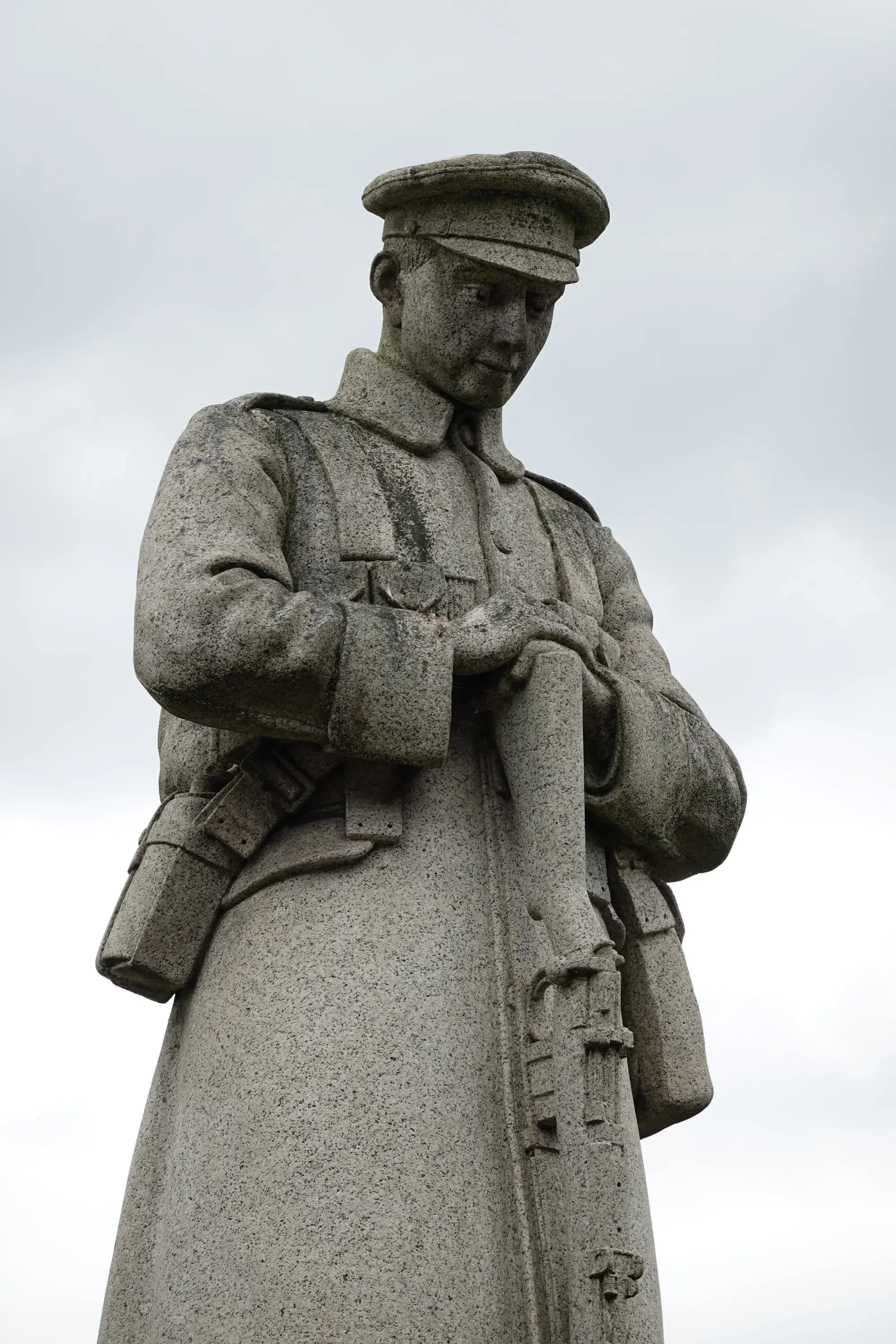
West Royd Park. The main park in the village is the grounds of West Royd House, a listed 19th-century house, with its entrance and gate piers on New Street. There is also a recreation ground on Calverley Lane by the cenotaph.
Walks. Farsley sits on the valley side with views north across the Aire Valley. Down the hill, the towpath of the Leeds and Liverpool Canal runs past Rodley, Calverley Woods and Apperley Bridge as part of the Aire Valley Towpath, a traffic-free walking and cycling route between Leeds and Bingley on National Cycle Network routes 66 and 696.
Sport. Farsley Cricket Club, founded in 1864, plays at Red Lane. Throstle Nest, off Newlands, has been the village's football ground since 1948; Farsley Celtic was wound up in December 2025 and a successor club, FC Farsley, was set up in its place.
Farsley Festival. A free family festival, run by volunteers, is held each year; in 2025 it took place in Hainsworth Park in June.
Schools
- PrimaryFarsley Farfield Primary SchoolAges 3 to 11, on Cote LaneUngraded inspection: continues to be a good school, 13 September 2023
- PrimaryFarsley Springbank Primary SchoolAges 4 to 11, on Wesley StreetUngraded inspection: continues to be a good school, 12 October 2022
- PrimaryFarsley Westroyd Primary School and NurseryAges 3 to 11, on Frances StreetUngraded inspection: has taken effective action to maintain the standards identified at the previous inspection (last graded Good, 2019), 1 April 2025
- SecondaryCo-op Academy PriesthorpeAcademy in the Co-operative Academies Trust, on Priesthorpe LaneGood overall; outstanding for personal development; good for quality of education, behaviour and attitudes, leadership and management, and sixth form provision, 21 February 2024
Latest inspection as the report words it. Ofsted stopped single-word overall grades in September 2024 and began report cards in November 2025, so recent reports read differently.
How places are given. Leeds City Council decides places at Farsley Farfield, Farsley Springbank and Farsley Westroyd, which are community schools. After children in care or previously in care and those with exceptional social or medical needs, it gives priority to brothers and sisters, then to children in the school's catchment priority area, then to other children by straight-line distance. Living in a catchment area doesn't guarantee a place. At Farsley Farfield the last Reception place went to a child outside the catchment living 2.100 miles away in 2026 and 1.456 miles away in 2025; in 2024 every applicant was offered a place. At Farsley Springbank the last place went to a child outside the catchment 0.441 miles away in 2026, 0.471 miles in 2025 and 0.426 miles in 2024. Farsley Westroyd offered a place to every applicant in 2024, 2025 and 2026. Co-op Academy Priesthorpe is an academy and sets its own admissions rules; it offered a Year 7 place to every applicant in 2024, 2025 and 2026. Check an address on the council's catchment map.
Check each school's latest Ofsted report and admissions area before you buy: catchments change from year to year.
Getting about
- RailNew Pudsey station, on Owlcotes Lane on Farsley's southern edge, is run by Northern. From Monday to Saturday in the daytime there are about four trains an hour each way: Leeds is 10 to 16 minutes away and Bradford Interchange 8 or 9 minutes. Trains run on to Halifax, Manchester Victoria and Chester, and some continue east of Leeds to York or Hull. There is step-free access to all platforms and a car park with 271 spaces; the village design statement notes it is often full.
- Buses to LeedsFirst Leeds' 16 runs through Farsley, stopping in the centre at the library, St John's Church and the cenotaph, then via Rodley, Bramley and Armley to Leeds city centre, about every 20 minutes on weekdays and Saturdays in the daytime and hourly on Sundays. It takes about 40 minutes to City Square. The 16A runs the same way early in the morning and in the evening.
- Leeds–Bradford busesFirst's 72 between Leeds and Bradford stops at Dawsons Corner, on the A647, every 15 minutes or so in the daytime, with buses through the night. Squarepeg's 9 links Farsley with Rodley, Horsforth and Pudsey about hourly, Monday to Saturday.
- RoadsThe Leeds Outer Ring Road (A6120) runs round Farsley's western and southern edges and meets the A647 Leeds–Bradford road at Dawsons Corner. Leeds City Council is rebuilding the Dawsons Corner junction, and bus operators warn of possible delays there until spring 2027.
What Farsley sellers say
4.6 from 512 Google reviews of Preston Baker Leeds
I would highly recommend Preston Baker to friends and family. They are professional, helpful, and always quick to respond to any questions or queries. Their prompt communication and willingness to help make the whole experience smooth and stress-free. Excellent customer service!
Brilliant company! Shaun and Rachel are fantastic! They took care of us and all the bits with our selling and purchasing. Highly recommend!
“Gemma has been excellent”
What's my Farsley home worth?
Enter your postcode for an instant estimate from recent sales near you. For a price you can put on the market, book a free valuation with your local Associate.
Book a free valuationLiving in Farsley: your questions
Is Farsley part of Leeds or Pudsey?
Both, in a way. Farsley was its own urban district from 1894, was merged into the Borough of Pudsey in 1937, and has been part of the City of Leeds since the 1970s. Its postal address is Pudsey, LS28, and it is in the Calverley and Farsley ward of Leeds City Council.
How do you get from Farsley to Leeds and Bradford?
By train from New Pudsey station, about four an hour on weekdays and Saturdays in the daytime, taking 10 to 16 minutes to Leeds and 8 or 9 minutes to Bradford Interchange. By bus, the 16 runs through Farsley to Leeds city centre about every 20 minutes in the daytime, and the 72 between Leeds and Bradford stops at Dawsons Corner.
What kind of homes are there in Farsley?
Stone terraces and back-to-backs from the mill era around Town Street, New Street and Bagley, some larger Victorian villas, and 20th-century estates such as Farfield (1930s and post-war semis), Springbank, Kirklees and Wadlands. Newer town houses and flats have been built on old mill sites at Beck Bottom and Newlands. Much of the old centre is a conservation area.
What is at Sunny Bank Mills?
The former worsted mill on Town Street is now home to offices, studios and shops, with a free contemporary art gallery, a tea room, a food market, workshops and seasonal markets. Its Museum and Archive runs guided tours on Saturdays.
Nearby area guides
Guide checked 29 November 2026. Contains HM Land Registry data © Crown copyright and database right 2026. This data is licensed under the Open Government Licence v3.0. Sources: Leeds City Council: Farsley Conservation Area Appraisal and Management Plan (2010), Leeds City Council: Farsley Village Design Statement (2010), Leeds City Council: Conservation areas, Historic England list entry 1214466, via British Listed Buildings: Church of St John the Evangelist, Farsley, Sunny Bank Mills, Sunny Bank Mills: History, Sunny Bank Mills: The Gallery, Sunny Bank Mills: What's on, Wikipedia: Farsley, Wikipedia: Samuel Marsden, Wikipedia: Farsley Celtic F.C., Wikipedia: Leeds Outer Ring Road, Walk Wheel Cycle Trust: Aire Valley Towpath, West Leeds Dispatch: Farsley Festival 2025 returns with solstice special, Northern: Leeds to Manchester Victoria via Bradford Interchange timetable, 13 December 2026 to 15 May 2027, Northern: Halifax to Hull and Leeds to York timetable, 13 December 2026 to 15 May 2027, Northern: Chester to Leeds timetable, 13 December 2026 to 15 May 2027, National Rail: New Pudsey station, bustimes.org: Farsley stops and services (bus open data, 19 to 20 November 2026), bustimes.org: First Leeds 16, Pudsey to Whinmoor, bustimes.org: First Leeds 16A, Pudsey to Whinmoor, bustimes.org: First 72, Leeds to Bradford, bustimes.org: Squarepeg 9, White Rose to Horsforth and Pudsey, Leeds City Council: Dawsons Corner and Stanningley Bypass improvements (July 2025), GOV.UK Get information about schools, Ofsted: inspection reports for each school (checked 29 November 2026), Leeds City Council: Farsley Farfield Primary School admissions, Leeds City Council: Farsley Springbank Primary School admissions, Leeds City Council: Farsley Westroyd Primary School admissions, Leeds City Council: Co-op Academy Priesthorpe admissions, Leeds City Council: Check if you live in a school catchment area.